Eradication of Child Labor in Ginger Production in Nigeria
As part of the Fund Against Child Labor (RVO), managed by the Netherlands Enterprise Agency – Fonds Bestrijding Kinderarbeid (FBK), the Fair Labor Association (FLA) was engaged by Catz International in a multi-year project to strengthen child protection and improve working conditions in Nigeria’s ginger industry. This project involved partnerships with the Royal Dutch Spices Association (KNSV), Catz International, and Verstegen Spices and Sauces.
The ginger supply chain was selected after a risk assessment in 2022. The assessment identified three primary causes of child labor in ginger-producing communities:
- Limited awareness of child labor issues,
- Cultural norms, and
- Economic hardship among ginger farmers.
Based on this information, the project partners developed an action plan for implementation.
Project objectives
- Identify Nigerian ginger processors, exporters, and ginger-farming communities to develop community-focused interventions that raise awareness of child labor and boost the economic empowerment of affected families.
- Enhance due diligence management systems and sustainable sourcing policies among Nigerian ginger processors, exporters, and Dutch importers to establish a due diligence process that addresses child labor and improves working conditions for young workers throughout their supply chains.
- Raise awareness among ginger farmers, farm workers, local traders, and extension staff about child labor to address two main causes: a lack of understanding among farmers of what constitutes child labor and cultural norms, such as the expectation that children should learn by participating in their parents’ primary work.
- Reduce poverty among ginger farmers by promoting diverse economic activities alongside ginger cultivation.
- Identify lessons learned and integrate them into KNSV’s existing Child Labor Due Diligence Toolkit. Develop an action plan for ongoing efforts. Share these lessons with other members of the Dutch Centre for the Promotion of Imports from developing countries (Centrum ter Bevordering van Import uit ontwikkelingslanden), CBI (within the Ginger Program in Nigeria), KNSV, and the Sustainable Spices Initiative (SSI) of the Sustainable Trade Initiative (IDH).
Phase II outputs and outcomes
Supply chain mapping and risk prioritization
A review of partner suppliers found deficiencies in supply chain traceability. FLA supported the three companies in strengthening supply chain traceability by providing two practical tools:
- A supply chain mapping tool
- A farmer record-keeping tool
These tools extended traceability beyond community mapping to individual farmers. Following the baseline assessment, child labor was identified as the primary risk due to its prevalence in ginger production at the farm level.
Training development
FLA designed two training modules: a Training of Trainers (ToT) and a community awareness module. In addition, communication and awareness-building materials were developed to enable project companies to replicate the training in their sourcing communities.
Training of Trainers for stakeholders
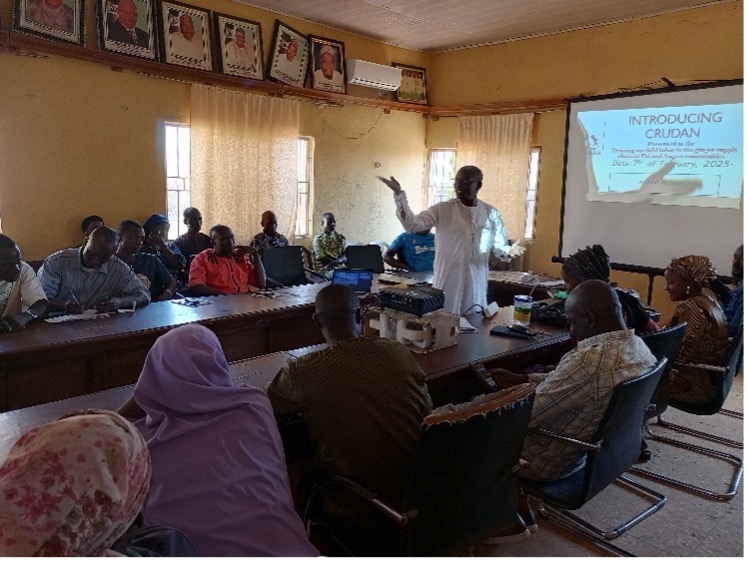
FLA conducted a training-of-trainers for 68 trainers from project companies, government officials, local civil society organizations, and community leaders on child labor and poor working conditions affecting young workers. This improved their knowledge and skills for working with farmers and workers on these issues. They now recognize children under 15 working on ginger farms, children under 18 participating in hazardous activities there, and poor labor conditions affecting young workers aged 15 to 18.
FLA trained 10 Agricultural Extension workers in Good Agricultural Practices (GAP) to support farmers in improving ginger yields.
Supplier awareness
FLA trained 14 Nigerian ginger processors and exporters, along with their Internal Management System (IMS) staff, on the Human Rights Due Diligence (HRDD) system, with a focus on child labor, establishing a child labor monitoring and remediation system (CLMRS), and improving the working conditions of young workers. In total, 15 staff members received training in HRDD management and child labor monitoring. As a result, participants improved their understanding of child labor, the minimum working age, prevalence, drivers/root causes, and the hazardous work prohibited for children in ginger farming.
Development of an HRDD Toolkit
FLA, together with its local partner, developed a practical toolkit to support HRDD implementation and risk mitigation in the ginger supply chain. The toolkit includes modular training materials and practical tools covering HRDD systems and responsible procurement; child labor prevention and monitoring; Good Agricultural Practices (GAP) in ginger production; and Village Savings and Loan Association (VSLA)-based financial literacy. The nine modules are:
- Module 1: HRDD: Human Rights Due Diligence. How can you implement it?
- Module 2: HRDD: Responsible procurement management
- Module 3: Training manual on child labor (ToT)
- Module 4: CL: Training on Child Labor and Hazardous Work (community training)
- Module 5: GAP: Training on land preparation and soil treatment in ginger production
- Module 6: GAP: Seed selection and treatment
- Module 7: GAP: Planting and planting techniques in ginger production
- Module 8: GAP: Weed and weeding techniques in ginger production
- Module 9: VSLA: YADE Financial Literacy Manual
It also provides practical assessment and monitoring tools, such as company and supplier IMS evaluation tools, supply chain mapping, community profiling instruments, and child labor awareness and communication materials.
HRDD program establishment to address child labor
Three Nigerian processors/exporters understand the root causes of child labor and are implementing policies and a human rights due diligence (HRDD) program to address the issue within their supply chains.
Increased community and farmer awareness of child labor and Good Agricultural Practices (GAP)
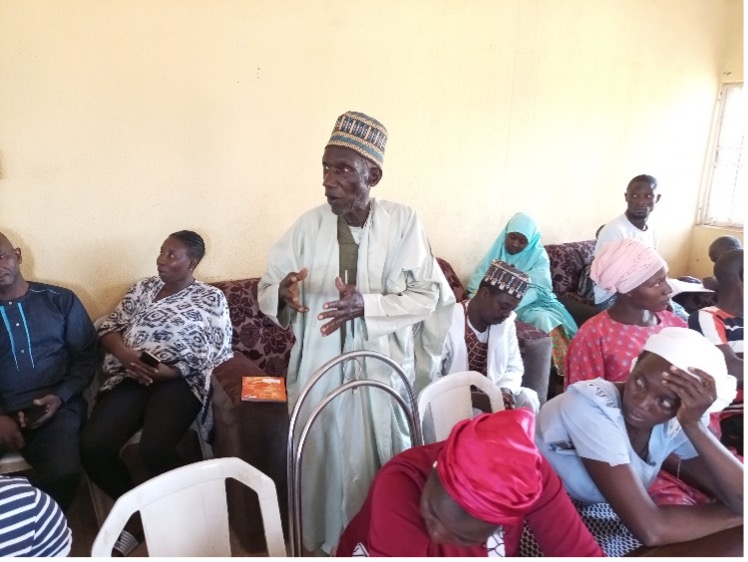
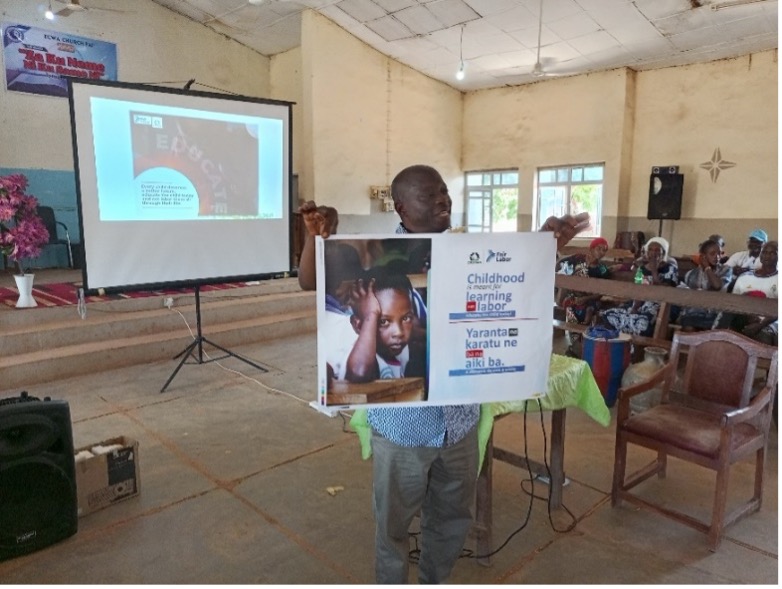
The project held awareness sessions for 203 participants, including ginger farmers, children, and local stakeholders in two Nigerian ginger farming communities, on child labor and hazardous working conditions affecting young workers. Additionally, 100 farmers received GAP training, and 3 ginger demo plots totaling 2.6 hectares were established to demonstrate GAP practices. It is expected that 96 ginger bags will be used as seedlings by project beneficiaries in subsequent planting cycles, contributing to income over time.
Livelihood interventions
To address the root cause of low farmers’ incomes, the project established 14 Village Savings and Loan Associations (VSLAs) in two communities. In its first year of operation, 350 ginger farmers, including 198 females and 152 males, joined VSLAs and collectively saved NGN17,226,650.00 (equivalent to $11,484.4), providing them with the means to start additional livelihood projects to support higher incomes.
Disseminate lessons
The lessons and training materials developed in the project were disseminated among SSI members, KNSV members (through the current child labor due diligence toolkit), companies, and other stakeholders participating in the CBI Ginger Program in Nigeria. CBI has 16 members. These stakeholders will continue field-level activities across their respective supply chains, guided by lessons learned and toolkits provided. They will lay the groundwork for the long-term engagement of ginger value chain actors to sustainably eradicate child labor in the ginger business.
Expected impacts
- A minimum of 65% of children aged 6 to 15 are removed from child labor, with 50% in community 1 and 80% in community 2.
- At least 75% girls and boys aged 16 to 17 have improved working conditions.
- At least 65% of children of ginger producers who are of school-going age are enrolled in school, including 50% in community 1 and 80% in community 2.
- At least 65% of project beneficiaries have improved their ginger farming practices and increased their yields. This number targets beneficiaries from community 2 who will receive the full project package.