Child labor
The Fair Labor Code mandates that no person shall be employed under the age of 15 or under the age for completion of compulsory education, whichever is higher. Our standards also prohibit hazardous work and the worst forms of child labor.
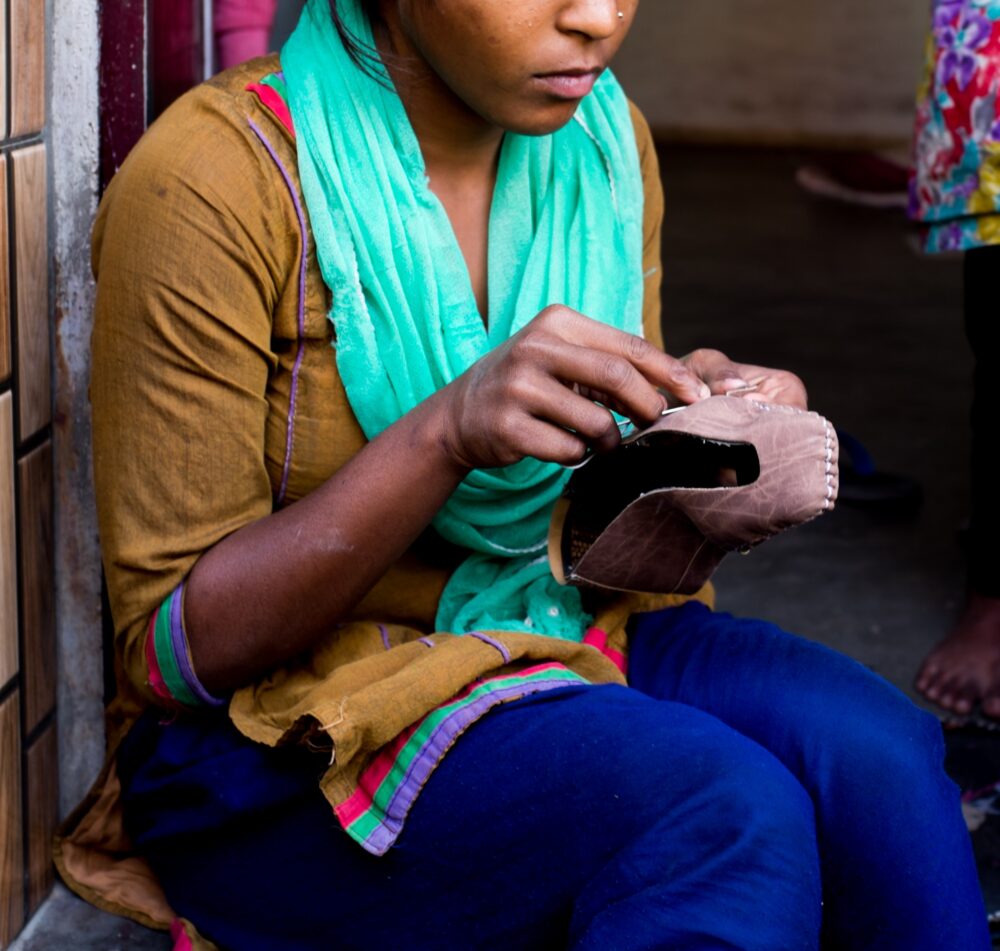
At the Fair Labor Association, we work with companies, suppliers, workers, farmers, civil society, and public institutions to prevent and remediate child labor by addressing both immediate risks and root causes.
Child labor is rarely caused by one actor or one workplace alone. In global supply chains, especially in agriculture, it is often linked to poverty, seasonal migration, informal recruitment, limited access to education and childcare, weak social protection, and low or unstable incomes.
Eliminating child labor requires more than prohibition. It requires systems that protect children, support families, improve working conditions, and enable responsible business practices across supply chains.
Our approach to child labor
Through our Fair Labor Standards, assessments, guidance, and collective action in upstream supply chains such as our award-winning Harvesting the Future initiative, we work to build systems that prevent child labor, protect children, support young workers, and strengthen the capacity of companies and suppliers to respond responsibly when risks are found.
Our work combines:
- Human rights due diligence: We help companies identify child labor risks across deeper tiers of their supply chains, including farms, labor intermediaries, processors, and informal work arrangements.
- Child protection: We support area-based interventions that improve access to education, child protection services, early childhood care, psychosocial support, and referral systems.
- Supplier and farmer engagement: We train suppliers, processors, farmers, labor contractors, and monitors to identify child labor risks, improve working conditions, and strengthen prevention and remediation systems.
- Remediation: When child labor is identified, our Fair Labor Standards call for household-level assessment and sustainable remediation solutions in the best interest of the child. Where child labor is systemic, companies are expected to work with upstream suppliers and stakeholders on an area- and community-based action plan.
Fair Labor Standards: Child labor
The Fair Labor Code and accompanying compliance benchmarks define labor standards that aim to achieve decent and humane working conditions in the supply chain of our member companies.
Code of Conduct
Child Labor
No person shall be employed under the age of 15 or the age for completion of compulsory education, whichever is higher.
Manufacturing compliance benchmarks
Child Labor
CL.1 General Compliance
Employers shall comply with all national laws, regulations and procedures concerning the prohibition of child labor.
CL.2 Child Labor
Employers shall not employ anyone under the age of 15 or under the age for completion of compulsory education, whichever is higher.
CL.3 Government Permits and Parental Consent Documentation
Employers shall abide by all relevant rules and procedures where the law requires government permits or permission from parents as a condition of employment, and shall keep documentation on-site for inspection at all times.
CL.4 Employment of Young Workers
Employers shall comply with all relevant laws that apply to young workers (e.g. those between the minimum working age and the age of 18), including regulations related to hiring, working conditions, types of work, hours of work, proof of age documentation, and overtime.
CL.5 Hazardous Work for Young Workers
No person under the age of 18 shall undertake hazardous work, i.e. work which, by its nature or the circumstances in which it is carried out, is likely to harm the health or safety or morals of persons under the age of 18.
CL.6 Young Workers Identification System
Employers shall have a system for identifying workstations and operations that are inappropriate for young workers according to applicable laws.
CL.7 Apprenticeships and Vocational Training / Minimum Working Age
Apprentices or vocational students shall not be under the age of 15 or under the age for completion of compulsory education, whichever is higher.
CL.8 Proof of Age Documentation
CL.8.1 Employers shall collect and maintain all documentation necessary to confirm and verify date of birth of all workers, such as birth certificates.
CL.8.1.1 Employers shall take reasonable measures to ensure such documentation is complete and accurate.
CL.8.1.2 In those cases where proof of age documentation is not readily available or unreliable, employers shall take all necessary precautions which can reasonably be expected of them to ensure that all workers are at least the minimum working age, including requesting and maintaining medical or religious records of workers, or through other means considered reliable in the local context.
Agriculture compliance benchmarks
Child labor risks are especially persistent in agricultural supply chains given the prevalence of dispersed farms, informal labor arrangements, seasonal harvests, and family-based production systems. Children may be present in fields because parents migrate for work, childcare is unavailable, schools are inaccessible, or families depend on children’s contribution to household income.
Our agriculture benchmarks for Fair Labor Accreditation recognize that children of workers and migrant families must have access to quality education and that employers should work with authorities and stakeholders to facilitate schooling or alternative education where needed. The benchmarks also call for access to appropriate day-care facilities for children below school age who live on or near farms.
Child Labor
CL.1 General Compliance
Employers shall comply with all national laws, ratified international conventions, fundamental labor rights, regulations and procedures concerning the prohibition of child labor.
CL.2 Child Labor/Minimum Age
Employers shall comply with ILO Convention 138 and shall not employ anyone under the age of 15 or under the age for completion of compulsory education, whichever is higher. If a country has a specified minimum age of 14 years due to insufficiently developed economy and educational facilities, employers might follow national legislations but must work to progressively raise the minimum age to 15 years.
CL.3 Light Work
In accordance with national laws and ILO Convention 138, children aged 13-15 (no younger than 12 years in countries that have applied for ILO exemption) may be involved in light work on farms provided that:
The work is not dangerous and not harmful to their health or development, and specifically:
should not involve use of or exposure to chemicals,
should not involve carrying heavy loads (children should not lift loads more than 15% of their body weight at any time),
should not involve the use of farm equipment, dangerous tools, ploughs, tractors, machetes, sharp tools, saws, or power engines,
should not involve working on heights (not more than 6 feet) such as in trees or on ladders, or in confined places such as silos or storage areas, and
should not involve strenuous work and extreme conditions such as standing or bending for several hours, working in high temperatures, and not having breaks.
The work does not prejudice their attendance at school and is done within reasonable time limits after school or during holidays. Specifically:
Working hours should not exceed 14 hours per week
no work should take place before 6:00 am and after 8:00 pm, and
there should be at least one full day (24 hours) rest per week.
The work is appropriate to the child’s age and physical condition and does not jeopardize the child’s social, moral or physical development.
The child’s parents provide supervision and guidance and maintain all documents as required by the law.
Other criteria specific to in-scope commodities or as defined by the national government in the country, that are not lower that the ILO standard on light work.
CL.4 Child labor/Right to education
CL.4.1 Resident and migrant children whose parents are involved in farm activities shall have guaranteed access to quality education. If there are no schools available in the area where children live or stay, the employer shall work with local authorities and/or other relevant stakeholders to facilitate access to education or provide alternative forms of schooling on the farm or in nearby communities.
CL.4.2 Where children of the workers below school age live on or near the farm, the employer shall provide access to decent and appropriate day-care facilities.
CL.5 Government Permits and Parental Consent Documentation
Employers shall abide by all relevant rules and procedures where the law requires government permits or permission from parents as a condition of employment of young workers.
CL.6 Employment of Young Workers
CL.6.1 Employers shall comply with all relevant laws that apply to young workers, (e.g., those between the minimum legal working age and the age of 18) including regulations related to hiring, working conditions, types of work, hours of work, proof of age documentation, and overtime.
CL.6.2 Employers shall maintain a list of all young workers, their entry dates, proof of age and description of their assignment.
CL.7 Hazardous Work for Young Workers
No person under the age of 18 shall undertake hazardous work, i.e., work which, by its nature or the circumstances in which it is carried out, is likely to harm the health, safety or morals of persons under the age of 18. Such work includes, but is not limited to, the application of agricultural chemicals, pesticides, and fertilizers, use of farm equipment tools and machinery, lifting or moving of heavy materials or goods, or carrying out hazardous tasks such as underground or underwater or at dangerous heights. Every activity performed by a young worker must be supervised by an adult.
CL.8 Apprenticeships and Vocational Training
CL.8.1 Employers may allow temporary workplace and apprenticeship education programs for young workers (14 or 15 – 18 years old) which are customary seasonal employment so long as such persons are closely supervised and their morals, safety, health, and compulsory education are not compromised in any way and all local, state and national laws regarding the employment of young workers are observed.
CL.8.2 Employers shall comply with all regulations and requirements of apprentice or vocational education programs.
CL.9 Children on Premises
The employer shall ensure that children (including those residing on the farm and those of migrant workers) are not exposed to dangerous agriculture production activities, including exposure to chemicals/pesticides.
CL.10 Removal and Rehabilitation of Child Laborers
CL.10.1 If a child laborer is found working on a farm, all relevant downstream suppliers, including the participating company, shall immediately assess the situation at the child’s household level and shall engage with relevant stakeholders to find a sustainable remediation solution that is in the best interest of the child.
CL.10.2 If child labor is found to be a systemic issue in a particular supply chain, the participating company shall in consultation with upstream suppliers, employers and other stakeholders devise an action plan for its remediation, if possible through an area- and community based approach.
Young workers
Not all work by adolescents is child labor. However, young workers—those who are above the minimum working age but under 18—require specific protections.
Our Fair Labor Standards require employers to comply with laws related to young workers, including rules on hiring, working conditions, proof of age, hours of work, overtime, and types of work. These standards also prohibit anyone under 18 from undertaking hazardous work that may harm their health, safety, or moral development.
We support companies and suppliers to:
identify young workers in supply chains;
assess whether their tasks are legally permitted and age-appropriate;
improve working conditions for young workers;
develop guidance for suppliers, farmers, and labor intermediaries;
prevent adolescents from being pushed into hazardous or exploitative work; and
ensure that work does not interfere with education.
This approach is especially important in agriculture where adolescents may participate in seasonal work, family farming, apprenticeships, or informal employment.
Harvesting the Future
Our flagship Harvesting the Future initiative is a multi-country, multi-commodity platform creating large-scale change on child protection and responsible recruitment. The model brings together companies, suppliers, local partners, civil society, and public institutions to improve labor conditions holistically.
Projects are currently underway across multiple agricultural supply chains in Türkiye, Egypt, and India. Each is tailored to address the unique needs of workers in specific agricultural commodities and regions.
Our impact across four Harvesting the Future projects in 2025 included:
-
17K
farmers and workers engaged
-
7K
children reached through programs
-
3K
children supported through education and protection services
-
75+
villages reached
Child labor projects


Child labor resources
Child labor news from FLA
-
Child Labor+8
Fair Labor Highlights – October 2026
October 14, 2026 View Fair Labor Highlights – October 2026 -
Advocacy+9
Fair Labor Highlights – August 2026
August 12, 2026 View Fair Labor Highlights – August 2026 -
Child Labor+6
Fair Labor Highlights – June 2026
June 10, 2026 View Fair Labor Highlights – June 2026