Just Transition
Climate resilience and decent work are closely intertwined. We’re taking action to ensure our members support Just Transition principles in their supply chains.
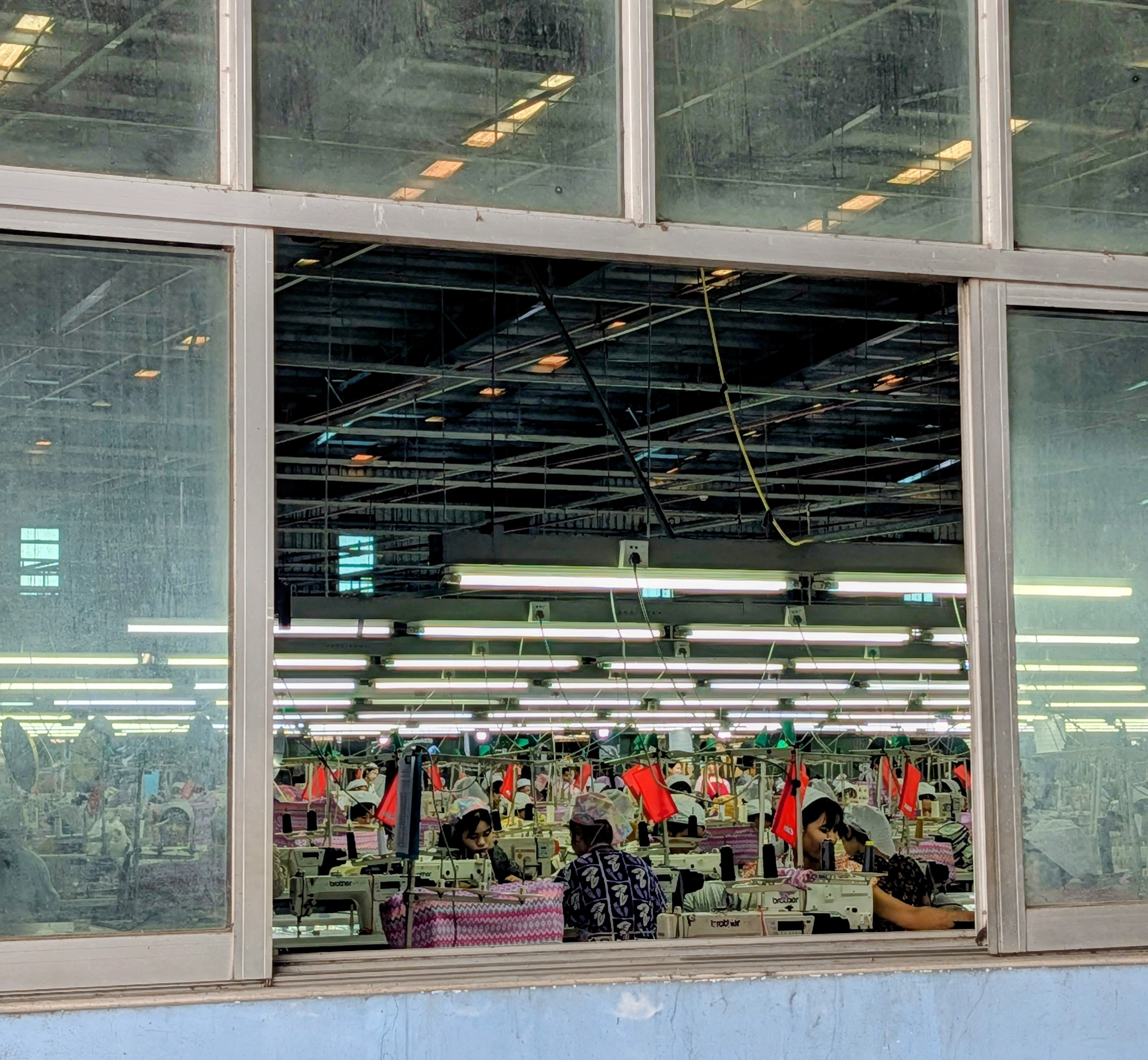
As temperatures rise and extreme weather events happen with increasing frequency due to climate change, workers at farms and factories worldwide are on the front lines.
The ILO estimates that more than 70% of the global workforce is exposed to excessive heat on the job and its associated safety and health risks. The impacts of heat stress can be deadly: it’s associated with conditions like dehydration, dizziness, fainting, heatstroke, urinary and kidney problems, menstrual health impacts, and cardiac distress.
-
2.4billion workers exposed to excessive heat on the job
-
22.87million occupational injuries related to excessive heat each year
These risks are especially salient for workers in factories and on farms, where temperatures can be substantially higher than average outdoor temperatures due to machinery, stagnant air, and direct sun exposure, and workers are often unable to stop working even when exposed to excessive heat.
Heat stress and extreme weather don’t only harm workers; they undermine the resilience of economies. Already, climate change is affecting supply chains in a myriad of ways, including productivity losses, higher absenteeism, quality defects, power outages, and delivery pressures.
As we navigate this transition, worker-informed heat protection and climate adaptation measures will be an essential investment in workforce stability, risk management, and supply chain resilience.
Just Transition workplan
As climate change risks intensify for workers, the Fair Labor Association is examining how we can further strengthen our standards around safe and healthy workplaces to encompass and mitigate climate-related risks and investigating opportunities to build climate resilience.
In 2026, we launched our Just Transition workplan to better integrate Just Transition principles and climate change into our standards, tools, and programs; develop, pilot, and test solutions; build knowledge among our members and affiliates; and engage with experts to support the intersection of climate and human rights due diligence.
We’re currently focusing on the impacts of climate change on four areas—heat stress, worker migration, gender equity, and fair compensation—and applying Just Transition concepts like worker participation and social dialogue to this work.
We’re also actively exploring ways to mitigate the impact of climate-related risks on workers in supply chains through innovative tools and projects, such as the Converged HREDD Assessment Tool and Supply Chain Action Network (SCAN).
Fair Labor Standards: Just Transition
The Fair Labor Code and accompanying compliance benchmarks define labor standards that aim to achieve decent and humane working conditions in the supply chain of our member companies. We are currently exploring how we can strengthen these standards to better encompass and mitigate climate-related risks.
Code of Conduct
Health, Safety, and Environment
Employers shall provide a safe and healthy workplace setting to prevent accidents and injury to health arising out of, linked with, or occurring in the course of work or as a result of the operation of employers’ facilities. Employers shall adopt responsible measures to mitigate negative impacts that the workplace has on the environment.
Manufacturing compliance benchmarks
HSE.1 General Compliance Health, Safety, and Environment
Employers shall comply with all national laws, regulations and procedures concerning health and safety, and the environment.
HSE.13 Ventilation/Electrical/Facility Installation and Maintenance
All necessary ventilation, plumbing, electrical, noise and lighting services shall be installed and maintained to conform to applicable laws and to prevent or minimize hazardous conditions to workers in the facility.
HSE.30 Health, Safety & Environmental Management System, Policies & Procedures
HSE.30.1 Employers shall develop, maintain, and regularly review health, safety, and environmental policies to ensure that they comply with all national laws, regulations and the FLA Workplace Code concerning health, safety, and environmental standards, regulations and procedures.
HSE.30.2 The health, safety, and environmental policies shall contain the framework for a comprehensive health, safety, and environmental management system including a HS&E risk assessment within which the following are clear and regularly tested and reviewed:
HSE.30.2.1 employers’ responsibilities;
HSE.30.2.2 workers’ rights and duties;
HSE.30.2.3 responsibilities of designated personnel;
HSE.30.2.4 procedures that enable workers to raise health, safety, and environmental concerns;
HSE.30.2.5 procedures for reporting death, injury, illness and other health and safety issues (for instance, near-miss accidents) and environmental emergencies;
HSE.30.2.6 protections to workers who allege health, safety, and environmental violations;
HSE.30.2.7 conducting root cause analysis on workplace accidents and taking proactive action to prevent future accidents.
HSE.30.3 Environmental policies shall include procedures to minimize environmental impacts with respect to energy, air emissions, water, waste, hazardous materials, and other significant environmental risks.
Agriculture compliance benchmarks
HSE.1. General Compliance Health, Safety, and Environment
Employers shall comply with all national laws, regulations and procedures concerning health, safety, and the environment.
HSE.13 Ventilation/Electrical/Facility Installation and Maintenance
For indoor workplaces, all necessary ventilation, plumbing, electrical, noise and lighting services shall be installed and maintained to conform to applicable laws and to prevent or minimize hazardous conditions to workers in the facility.
HSE.21 Rest Areas
Employers shall make provision for rest and breaks areas for the workers. These areas should provide protection against extreme weather conditions and wild animals and should have facilities for health emergencies.
FLA factory assessment findings
Many global apparel manufacturing hubs are located in southern Asia, where heat-related risks are already widespread. As heat stress season begins to extend into September and October, these risks are only intensifying.
Temperature control has been included in our factory assessments for the Fair Labor Accreditation Manufacturing Program since 2021. In over 300 assessments conducted from 2021-2025, findings of heat issues in factories ranged from 14 to 32 percent, with the highest frequency happening in 2025. India, Cambodia, Vietnam, and Indonesia consistently have had the highest number of findings related to heat stress over the last five years across 15 countries.
Analysis of the findings indicates significant gaps in systematic heat-stress prevention, including inadequate monitoring and risk assessment, limited root-cause analysis and insufficient examination of impacts on workers.
Worker interviews have also identified concerns around poor ventilation, excessive temperatures and discomfort when using personal protective equipment in extreme heat.
Heat stress resources
Rising and volatile temperatures impacting workers is a problem that requires strong stakeholder collaboration and partnership. We participate in a heat stress multistakeholder group made up of 16 organizations from academia, non governmental organizations, multi-stakeholder initiatives, and trade associations, convened by ILO’s Better Work. Guidance and case studies have been published by some of these organizations to support industry progress.
American Apparel & Footwear Association: Heat Stress Toolkit
NYU Stern Center for Business and Human Rights: Too Hot to Ignore
Cornell ILR Global Labor Institute: Six Seasons, Four Summers
Royal Holloway, University of London: Oppressive Heat
Just Transition news from FLA
-
Child Labor+8
Fair Labor Highlights – October 2026
October 14, 2026 View Fair Labor Highlights – October 2026 -
Advocacy+8
Fair Labor Highlights – September 2026
September 9, 2026 View Fair Labor Highlights – September 2026 -
Advocacy+9
Fair Labor Highlights – August 2026
August 12, 2026 View Fair Labor Highlights – August 2026